Sustainable Landscaping: 8 Practices for an Eco-Friendly Garden
Reduce your garden's environmental impact with sustainable landscaping practices. From water conservation to organic soil management and wildlife habitat creation.
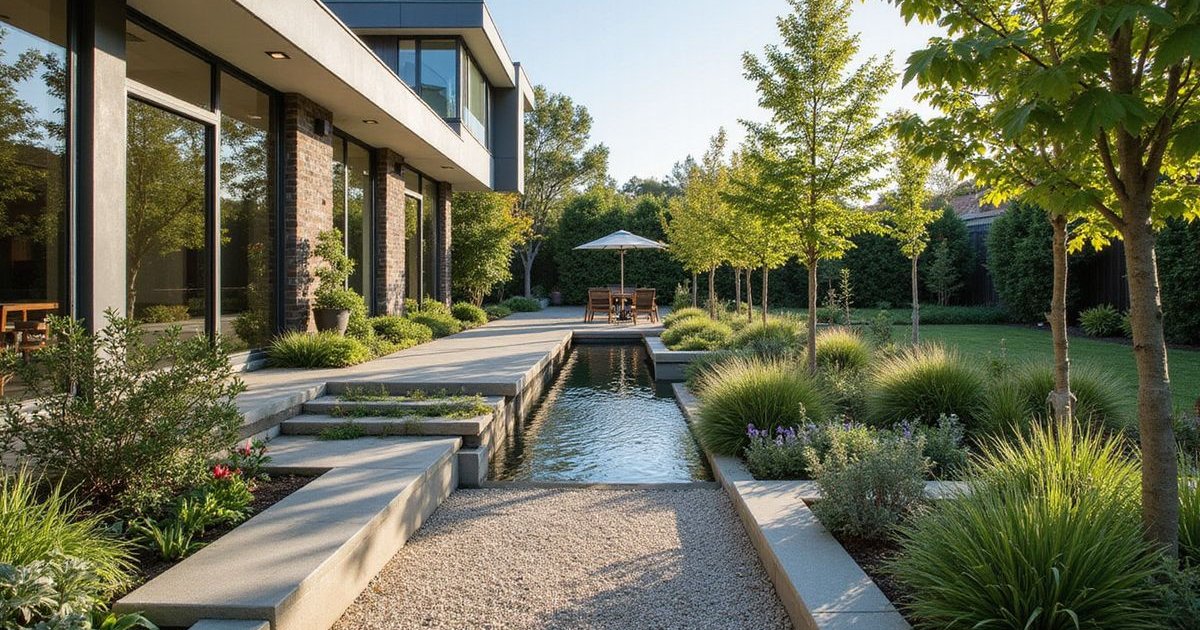
Sustainable landscaping isn’t just good for the environment. It creates gardens that are more resilient, lower maintenance, and often more beautiful than conventional approaches.
Our team at John French Landscape Design has spent over 40 years adapting gardens to Melbourne’s unique conditions, so we have seen firsthand how these methods pay off.
Here are eight practices that make your Melbourne garden more sustainable. Our planting and gardens expertise helps you implement these principles from the design stage.
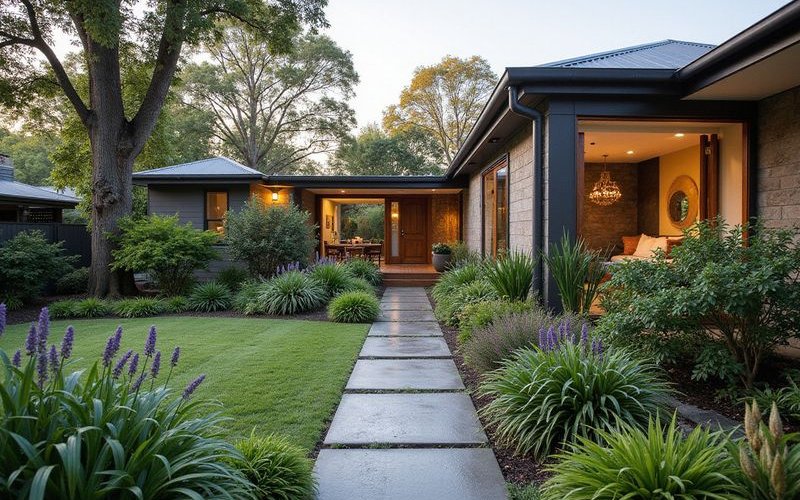
1. Water-Wise Design
The Practice
Design your garden to minimize water needs through smart plant selection, efficient irrigation, and water harvesting.
How to Implement
You must move beyond basic sprinklers to meet modern efficiency standards.
- Group by Hydrozone: Cluster plants with similar water needs together so you don’t overwater hardy natives just to keep a thirsty fern alive.
- Install Drip Irrigation: Sub-surface drip lines deliver water directly to the roots and reduce evaporation by up to 20% compared to sprays.
- Smart Controllers: Use a Wi-Fi-enabled controller (like Hunter Hydrawise) that adjusts watering schedules based on local weather data from the nearest Bureau of Meteorology station.
- Mulch Heavily: Apply 75-100mm of chunky pine bark or similar organic mulch to lock in soil moisture.
Impact
Target 155 is the current voluntary target for Melbourne, encouraging residents to limit use to 155 liters per person per day. Data from 2023-24 shows the average residential use was still 163 liters. A well-designed system can help you bridge that gap and save significantly on water bills.
| Feature | Standard Spray System | Smart Drip System |
|---|---|---|
| Efficiency | 60-75% | 90-95% |
| Wind Drift | High water loss | Near zero |
| Disease Risk | High (wet foliage) | Low (dry foliage) |
2. Native Plant Selection
The Practice
Prioritize Australian native plants, particularly species indigenous to your local area like Eltham, Ivanhoe, or Kew.
Benefits
Indigenous plants have evolved alongside local pests and soil conditions for thousands of years.
- Local Adaptation: They thrive in our specific rainfall patterns without constant babying.
- Wildlife Support: Specific local insects and birds rely on these exact species for survival.
- Low Inputs: They generally require zero synthetic fertilizers once established.
Top Picks for Melbourne’s North-East
Our designers often recommend these species for their beauty and resilience:
- Sweet Bursaria (Bursaria spinosa): Critical habitat for the threatened Eltham Copper Butterfly.
- Rock Correa (Correa glabra): A bomb-proof shrub that handles both shade and drought.
- Yellow Box (Eucalyptus melliodora): An iconic canopy tree for larger properties in Nillumbik.
Getting Started
Visit a specialist nursery like the Edendale Indigenous Plant Nursery in Eltham or Bulleen Art & Garden. Staff there can tell you exactly which provenance suits your postcode.
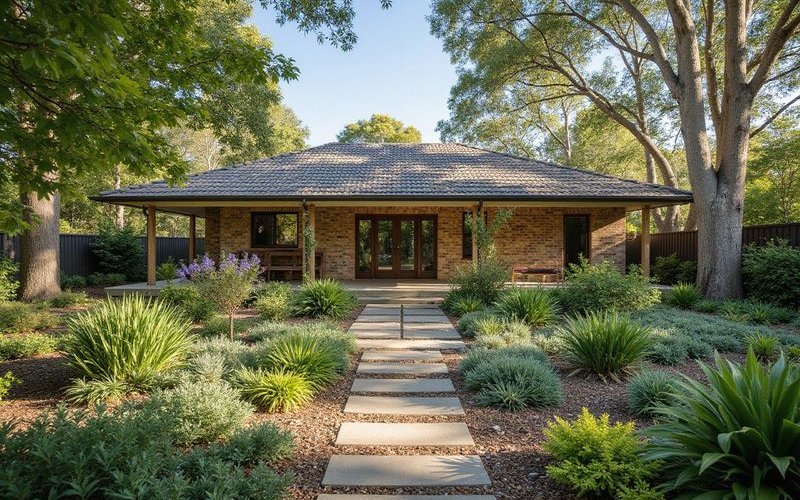
3. Healthy Soil Building
The Practice
Focus on building living, healthy soil rather than relying on synthetic fertilizers.
The Clay Challenge
Melbourne’s north-eastern suburbs are famous for their heavy clay soils. We often see water pooling on the surface while the roots underneath remain dry. Breaking this clay is the single most important step for a sustainable garden.
Methods
- Gypsum: Apply this clay-breaker annually to improve structure without changing pH.
- Organic Matter: Dig in compost to aerate the soil and feed beneficial microbes.
- Biochar: Consider adding biochar for a permanent improvement in water and nutrient retention.
- No-Till Gardening: Minimize digging once your beds are established to preserve fungal networks.
Why It Matters
Healthy soil holds more water, supports stronger plants, and sequesters carbon. Research suggests that increasing soil organic matter by just 1% can increase water holding capacity by up to 20,000 gallons per acre.
4. Composting On-Site
The Practice
Convert garden and kitchen waste into valuable compost rather than sending it to landfill.
Council Rebates
Many local councils, including Banyule and Nillumbik, partner with the “Compost Revolution” program. You can often get 50% to 80% off the RRP of compost bins, worm farms, or Bokashi buckets just by taking a quick online tutorial.
Options
- Subpod: An in-ground worm farm that doubles as a garden seat (great for smaller courtyards).
- Tumbling Composters: Ideal for keeping rodents out in suburban backyards.
- Bokashi: Perfect for fermenting kitchen scraps (including meat and dairy) indoors before burying them.
Benefits
- Reduces waste sent to landfill.
- Creates free, nutrient-rich soil conditioner.
- Closes the nutrient loop within your own property.
5. Wildlife Habitat Creation
The Practice
Design your garden to support local birds, insects, and other wildlife.
Features to Include
You need to provide more than just a birdbath to attract a diversity of species.
- Prickly Shrubs: Plant dense species like Acacia verticillata (Prickly Moses) to give small birds like wrens a safe haven from aggressive Noisy Miners.
- Nesting Boxes: Install boxes specifically sized for local residents like the Powerful Owl or microbats.
- Lizard Lounges: Place flat rocks in sunny spots for Blue-tongue lizards to bask.
- Water Sources: Include a shallow dish with a rock in the center so insects can drink without drowning.
Impact
Your garden becomes part of a larger habitat network supporting biodiversity. Connecting these “green corridors” through suburbs like Ivanhoe is vital for species survival in urban areas.
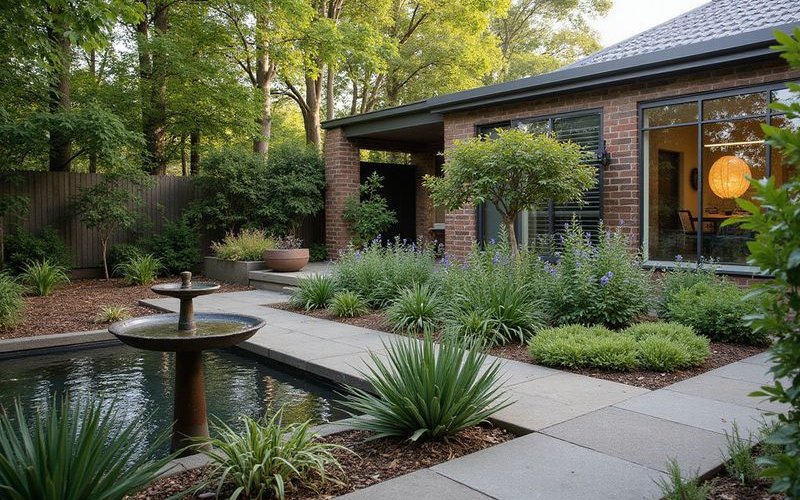
6. Sustainable Materials
The Practice
Choose landscaping materials with lower environmental impact and better longevity.
Considerations
- Permeable Paving: Melbourne’s flash floods are becoming more intense. Permeable pavers allow rain to soak into the ground rather than overwhelming stormwater drains.
- Recycled Timber: Look for Class 1 recycled hardwoods for decking or pergolas instead of new-growth rainforest timber.
- Local Stone: Sourcing stone from nearby (like Castlemaine slate) drastically reduces transport emissions compared to imported sandstone.
Avoid
- Imported natural stone (high carbon footprint).
- Composite decking that cannot be recycled at end-of-life.
- Cheap concrete pavers that crack and need replacing in five years.
7. Reduced Chemical Use
The Practice
Minimize or eliminate synthetic pesticides and herbicides.
Alternatives
- Integrated Pest Management (IPM): Monitor your plants regularly and intervene only when necessary.
- Beneficial Insects: Encourage ladybirds and lacewings which naturally hunt aphids.
- Physical Barriers: Use netting or tree bands to stop pests before they start.
- Eco-Oils: Use botanical oils (like Neem or horticultural oil) for spot treatments rather than broad-spectrum sprays.
Benefits
- Healthier for your family and pets.
- Protects the beneficial insects that do the work for you.
- Prevents chemical runoff into our local creeks and the Yarra River.
8. Climate-Appropriate Design
The Practice
Design for Melbourne’s current and future climate, not just historical conditions.
The Forecast
CSIRO projections for Victoria indicate a trend toward hotter, drier years with more extreme heat events. Our designs now assume these conditions are the new normal.
Considerations
- Smart Shade: Plant deciduous trees on the north and west sides of your home. They block the harsh summer sun but let winter light warm your house.
- Heat Tolerance: Select plants that can survive a string of days over 35°C without wilting.
- Reduced Lawn: Replace thirsty turf with permeable gravel paths or native groundcovers like Dichondra repens.
- Windbreaks: Plant dense hedging to buffer hot northerly winds in summer.
Long-Term Thinking
Climate is changing. Design for resilience so your garden thrives in 2030 and beyond.
Getting Started
You don’t need to implement everything at once. Start with one or two practices and build from there. Every sustainable choice contributes to a healthier garden and environment.
Want help creating a sustainable landscape? Contact us to discuss eco-friendly design for your Melbourne garden.