Steep Block Landscaping Permits: Navigating Council Approvals in Melbourne
Understanding VPO overlays, building permits, and council requirements for retaining walls and earthworks on sloping properties in Melbourne's councils.
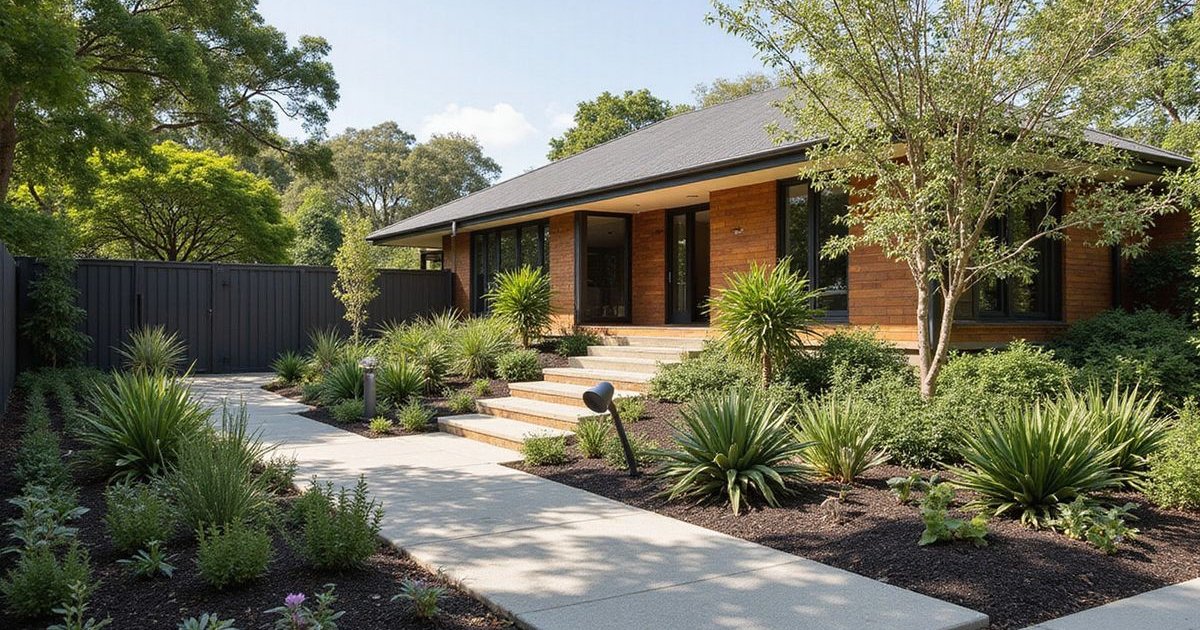
Landscaping a steep block in Melbourne presents a unique set of challenges regarding council permits and planning requirements. You want a stunning garden, but the local regulations often feel like a maze of red tape.
Understanding these requirements early saves you time and protects your budget. Our steep block landscaping service includes navigating all council requirements on your behalf.
This guide clarifies the specific permits needed for landscaping projects in Melbourne’s northeast suburbs.
Building Permits for Retaining Walls
When Required
Most homeowners assume a low wall is exempt from scrutiny. In reality, Victorian building regulations are strict about structural integrity on slopes. A building permit is mandatory for retaining walls in specific scenarios.
- Height matters: Any wall over one metre in height (measured from the lower ground level) requires approval.
- Load bearing: Even a short wall needs a permit if it supports significant loads like driveways or building footings.
- Boundary proximity: Walls located within one metre of a boundary often trigger a permit requirement regardless of height.
- Safety risks: Any structure where failure could damage adjoining property requires oversight.
The Process
The path to approval follows a logical sequence.
- Design documentation: You need scaled drawings with precise dimensions.
- Engineering certification: A structural engineer must sign off on the stability of the design.
- Building surveyor application: The surveyor reviews the package for compliance with the Building Act 1993.
- Approval: Most permits are issued within 2 to 4 weeks if the paperwork is flawless.
- Construction: Building must adhere strictly to the stamped plans.
- Final inspection: The surveyor returns to issue the Certificate of Final Inspection.
Costs
Budgeting accurately prevents surprises later. Current market rates for 2025 in Melbourne typically fall into these ranges.
| Service Item | Estimated Cost Range |
|---|---|
| Structural Engineering Fees | $1,200 - $3,000 |
| Building Permit Fees | $800 - $1,800 |
| Building Surveyor Inspections | $500 - $1,000 |
| Total Estimated Allocation | $2,500 - $5,800 |
Important Notes
You cannot apply for this permit retrospectively without significant penalties. The plans you submit must match exactly what you intend to build. Inspectors will visit at key stages, such as before pouring concrete footings. A Certificate of Final Completion is the only document that legally closes the project.
Vegetation Protection Overlays (VPO)
What Is a VPO?
Melbourne councils use Vegetation Protection Overlays to preserve the “leafy green” character of suburbs like Eltham and Ivanhoe. Nillumbik Shire is famous for its strict adherence to these rules. The overlay ensures that development does not strip the area of its canopy.
Requirements Under VPO
These regulations cover more than just chopping down a gum tree. A permit is frequently required for several activities.
- Removal or Lopping: Cutting back native vegetation by more than a specific percentage (often 10-30%) triggers a permit.
- Root Zone Encroachment: Building within the Tree Protection Zone (TPZ) is heavily restricted.
- Structural Works: Excavation or landscaping that alters ground levels near protected trees is vetted.
- Understorey Clearing: Removing native shrubs or ground covers can also be a violation.
The Application Process
Securing a VPO permit is an exercise in detail.
- Arborist assessment: An independent arborist evaluates the health and significance of the tree.
- Impact assessment: Your designer explains how the construction will coexist with the vegetation.
- Council application: We submit the report and plans to the planning department.
- Council assessment: Officers review the proposal against local biodiversity strategies.
- Conditions: Approval often mandates tree protection fencing during construction.
- Offset requirements: You may need to plant three new native trees for every one removed.
Timeline
Patience is a necessary asset here.
- Standard applications: 4 to 8 weeks.
- Complex cases: 8 to 12+ weeks.
- VicSmart applications: 10 business days (if you meet specific fast-track criteria).
Planning Permits
When Required
Planning permits differ from building permits. They focus on land use and neighborhood character rather than structural safety. You likely need one for major changes.
- Earthworks: Excavation or fill exceeding one metre in depth usually requires planning approval.
- Special Overlays: Properties in Heritage or Environmental Significance zones face stricter controls.
- Structure Size: Pergolas or decks exceeding specific heights or floor areas trigger a review.
- Heritage: Any external alteration in a Heritage Overlay (HO) needs permission.
Common Overlays
Northeast Melbourne suburbs are covered by a patchwork of planning controls.
- ESO (Environmental Significance Overlay): Focuses on habitat corridors and water catchments.
- SLO (Significant Landscape Overlay): Protects the visual character of the skyline and tree canopy.
- HO (Heritage Overlay): Preserves historically significant buildings and gardens.
- BMO (Bushfire Management Overlay): Mandates specific materials and vegetation management for fire safety.
Checking Requirements
Identifying your overlays early is critical. The Victorian government’s VicPlan website provides free property reports. A Section 32 vendor statement also lists these details. Calling the council planning desk is another effective way to get clarity.
Council-Specific Considerations
Nillumbik Shire Council
This area covers Eltham, Diamond Creek, and Hurstbridge.
- Strict VPO: Nillumbik has some of the toughest native vegetation laws in Victoria.
- Green Wedge: Proposals must align with “Green Wedge” management plans.
- Detail Heavy: Applications here require comprehensive land management plans.
Manningham City Council
This council manages Templestowe, Doncaster, and Bulleen.
- Landscape Overlays: The DD08 overlay is common here and restricts site coverage to ensure garden space remains.
- Slope Constraints: Specific restrictions apply to development on slopes greater than 20%.
- Zoning Variations: Requirements shift drastically between General Residential and Low Density Residential zones.
Banyule City Council
Suburbs like Heidelberg, Ivanhoe, and Viewbank fall under this jurisdiction.
- VPO Schedule 5: This specific schedule heavily protects canopy trees in the Ivanhoe area.
- Neighborhood Character: Proposals are judged on how well they blend with the existing streetscape.
- Water Management: Overland flow paths are a major focus for engineering approval here.
Working with Council
Tips for Success
Approaching the council with a cooperative mindset yields better results.
- Pre-application meeting: Booking a 15-minute consultation with a planner can clarify major red flags early.
- Complete applications: Submitting a “half-baked” application pauses the statutory clock immediately.
- Quality documentation: Professional, legible plans make the assessment officer’s job easier.
- Responsive communication: Replying to Requests for Further Information (RFI) within 48 hours keeps momentum.
- Realistic expectations: Acknowledging that some trees simply cannot be removed saves wasted effort.
Common Mistakes
Homeowners often stumble on these hurdles.
- The “She’ll be right” attitude: Assuming a permit is unnecessary is the fastest way to a stop-work order.
- Premature starts: Breaking ground before the physical permit is in hand is illegal.
- Incomplete reports: Submitting an arborist report that lacks a specific impact assessment.
- Ignoring neighbours: failing to consult adjoining owners on boundary wall details leads to disputes.
Our Permit Experience
What We Handle
Since John French founded the company in 1981, we have navigated thousands of council applications. Our team manages the entire administrative burden for you.
- Building permit applications: We handle the paperwork for complex retaining walls.
- VPO submissions: Specialized reports for vegetation removal are part of our standard process.
- Council liaison: Dealing with planning officers is a daily task for our project managers.
- Engineering coordination: We brief the engineers to ensure their structural designs match our aesthetic vision.
- Surveyor coordination: The certification process is streamlined through our established networks.
Our Approach
We view permits as a design parameter rather than a roadblock.
- Early assessment: Potential constraints are identified during the initial site consultation.
- Integrated design: Solutions are engineered to comply with regulations without sacrificing beauty.
- Quality documentation: Our CAD drawings are detailed specifically to satisfy council checklists.
- Proactive management: We follow up on applications weekly so your file doesn’t gather dust.
- Compliance focus: Construction teams are briefed on every condition to ensure the final sign-off is smooth.
Budgeting for Permits
Allow for These Costs
Financial planning for permits requires a realistic outlook.
- Building permit: $1,800 - $5,000 (inclusive of engineering).
- VPO application: $1,200 - $3,500 (inclusive of arborist reports).
- Planning permit: $1,500 - $6,000+ (depending on complexity).
- Consultant reports: Soil tests and land surveys can add another $1,000 to $2,000.
Timeline Allowances
Time is as valuable as money in construction.
| Permit Type | Typical Timeframe |
|---|---|
| Building Permit | 2 - 4 weeks |
| VPO Application | 4 - 12 weeks |
| Planning Permit | 8 - 16+ weeks |
These durations should be built into your project start date.
Questions About Permits?
The rules for building on slopes in Melbourne are intricate.
If you are considering a landscaping project in the northeast suburbs, contact us to clarify exactly what your property needs. We can assess your site and manage the entire approval process.