10 Questions to Ask Before Hiring a Landscape Designer
Make an informed choice when selecting a landscape designer. These essential questions help you evaluate experience, process, and fit before committing to a project.
Choosing a landscape designer is a significant decision. You’ll be working closely with this person or firm, investing considerable money, and trusting them with your property. Professional landscape design is a partnership that determines the success of your outdoor transformation.
These ten questions will help you evaluate potential designers and find the right fit for your project.
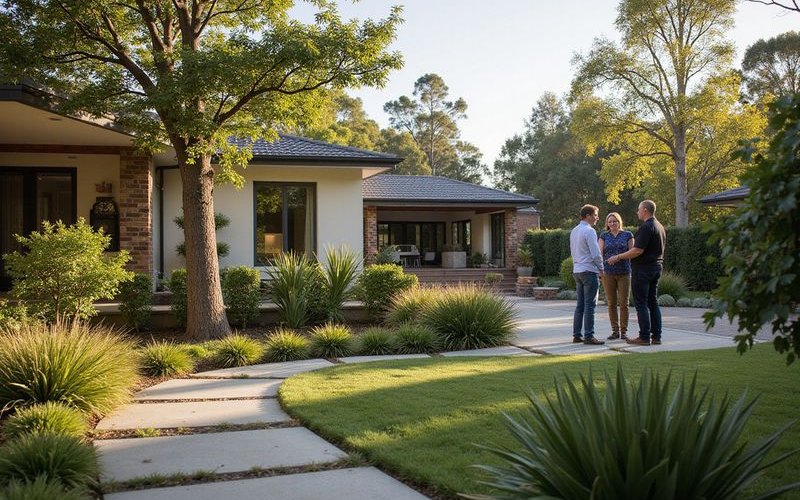
1. Can I See Examples of Similar Projects?
Why ask: You want to see evidence they’ve successfully completed projects like yours.
What to look for:
- Projects of similar scale and budget
- Similar site challenges (steep blocks, pools, etc.)
- Style alignment with your preferences
- Before and after comparisons
- Completed projects, not just designs
Red flags:
- Can’t show relevant examples
- Only renders, no built projects
- Reluctance to share portfolio
The “So What” Factor
Melbourne’s geography varies wildly, from the flat sandy soils of Bayside to the steep, rocky shale of Eltham and Warrandyte. We see many homeowners make the mistake of hiring a designer with a stunning portfolio of flat blocks to manage a complex sloping site. You need a partner who understands the specific drainage and retaining engineering required for your location.
Insider Tip: Ask to see a project that is at least three years old. A brand-new garden always looks pristine, but a three-year-old project reveals whether the plant selection was actually suitable for the microclimate and if the hardscaping materials have weathered well.
2. What’s Your Design Process?
Why ask: Understanding their process helps set expectations and reveals their professionalism.
What to look for:
- Clear, structured approach
- Defined stages and milestones
- Client involvement opportunities
- Revision procedures
- Timeline expectations
Good answers include:
- Site assessment methodology
- How many concept options
- Review and feedback process
- Documentation deliverables
Standard Melbourne Industry Stages
We recommend looking for a workflow that mirrors the Australian Institute of Landscape Architects (AILA) standard phases:
- Concept Design: Broad strokes, layout, and mood.
- Town Planning: Essential for properties with Heritage Overlays or Significant Landscape Overlays (SLO).
- Design Development: Selecting specific materials and plants.
- Construction Documentation: Technical drawings for the builders.
3. Do You Also Build, or Just Design?
Why ask: This affects accountability, communication, and project flow.
Consider:
- Design-build firms: Single point of accountability, seamless process
- Design only: More builder choice, but handoff required
Neither is inherently better—understand what you’re getting.
Comparing the Models
| Feature | Design-Only Firm | Design & Construct Firm |
|---|---|---|
| Accountability | Split between designer and builder. | Single point of contact (the firm). |
| Cost Control | Actual build costs known only after tendering. | Costs estimated accurately during design. |
| Permits | Designer handles planning; builder handles building permits. | Firm handles all permits end-to-end. |
| Changes | Designer must re-issue drawings to builder. | Adjustments happen internally on-site. |
Important: If you choose a “Design & Construct” firm in Victoria, ensure they hold a DB-L (Domestic Builder - Limited) license from the Victorian Building Authority (VBA). This license is legally required for any structural landscaping work (like decking or retaining walls) where the contract value exceeds $10,000.
4. What Are Your Fees and What’s Included?
Why ask: Understand exactly what you’re paying for to avoid surprises.
Clarify:
- Consultation fees
- Design package options
- What’s included in each
- Additional costs (permits, engineering)
- Payment schedule
Get in writing:
- Fixed fee vs. hourly
- Number of revisions included
- What triggers additional charges
Understanding 2026 Cost Structures
We find that clarity on fees upfront prevents friction later. In the current market, comprehensive landscape design fees generally sit between $3,000 and $10,000+, depending on site complexity.
Key Financial Milestones:
- Initial Consultation: Often $250-$500 (credited back if you proceed).
- Contract Threshold: Under Victorian law, any domestic building work over $10,000 requires a written Major Domestic Building Contract.
- Insurance Threshold: Projects over $16,000 mandate that the builder provides Domestic Building Insurance (DBI) to protect you if they disappear or become insolvent.
5. What Qualifications and Experience Do You Have?
Why ask: Background matters, especially for complex projects.
Valuable qualifications:
- Landscape architecture degree
- Horticultural qualifications
- Industry memberships (LIAV, AILDM)
- Construction experience
- Years in business
Consider:
- Formal training vs. experience
- Specialisations
- Local knowledge
Credentials That Count
Our team prioritizes active membership in peak bodies like Landscaping Victoria Master Landscapers (LVML) or the Australian Institute of Landscape Architects (AILA). These memberships require adherence to a strict Code of Ethics and regular professional development.
Why it matters: A qualified horticulturalist understands that planting a Ficus near your sewer line is a disaster waiting to happen. An unqualified operator might just see a nice hedge.
6. How Do You Handle Permits and Council Approvals?
Why ask: Many projects require permits. You need to know who handles this.
Clarify:
- Are permit applications included in fees?
- Experience with your local council
- Understanding of VPO and planning overlays
- Engineering coordination if needed
Important for:
- Retaining walls over 1m
- Structures (pergolas, pool houses)
- Properties with overlays
- Significant earthworks
Navigating Melbourne’s Overlays
We often encounter specific planning controls that catch homeowners off guard. For example, properties in Nillumbik Shire often face strict Significant Landscape Overlays (SLO), while Boroondara has extensive Heritage Overlays (HO) that restrict what you can do even in your backyard.
The “Substantial Tree” Rule: Many councils protect any tree with a trunk circumference greater than 0.5 metres (measured at 1 metre above ground). Removing one without a permit can result in fines exceeding $2,000 per tree. Your designer must know how to navigate these local “Report and Consent” requirements.
7. What’s Your Approach to Budget?
Why ask: You need realistic expectations, not wishful thinking.
Good designers:
- Ask about budget early
- Design within constraints
- Provide cost indications during design
- Suggest phasing if needed
- Are honest about what’s achievable
Red flags:
- Avoid budget discussions
- Promise everything for any budget
- Only reveal costs after design
Realistic Budgeting Rules of Thumb
A widely accepted guideline in the property industry is to allocate 5% to 10% of your home’s value for a comprehensive landscape renovation. For a $2 million property in Kew, this suggests a budget of $100,000 to $200,000 for a full transformation including hardscapes, planting, and irrigation.
Insider Tip: Ask for a “Concept Cost Estimate” early in the design phase. We always provide a rough breakdown before moving to technical drawings so you aren’t paying for a design you can’t afford to build.
8. Can I Speak to Previous Clients?
Why ask: References provide insight no portfolio can.
Ask references:
- Was the designer responsive?
- How did they handle problems?
- Was the project on time and budget?
- Would you use them again?
- Any surprises during the process?
Note: Designers will provide their best references—this is still valuable.
The One Question You Must Ask
When speaking to a past client, ask about the Defects Liability Period. This is the warranty period (usually 12 months) where the builder returns to fix any issues like loose pavers or faulty irrigation. Did the contractor return willingly to fix small issues, or did they ghost the client once the final invoice was paid?
9. What Happens if I Want Changes During Construction?
Why ask: Understanding the variation process prevents disputes.
Clarify:
- How are changes priced?
- Who approves variations?
- How are they documented?
- Impact on timeline?
Best practice:
- Written variation orders
- Clear pricing before proceeding
- Signed approval process
The “Variation Order” Protocol
We operate on a strict “no surprise” policy regarding changes. In Victoria, any change to the scope of work after the contract is signed must be documented in a formal Variation to Contract.
How it works:
- You request a change (e.g., upgrading to bluestone pavers).
- The builder presents a written document detailing the cost difference and timeline impact.
- Both parties sign before the material is ordered.
- If a builder relies on verbal agreements (“She’ll be right, we’ll sort it later”), you are opening yourself up to a budget blowout.
10. How Will We Communicate Throughout the Project?
Why ask: Communication breakdowns cause most project problems.
Establish:
- Primary contact person
- Communication frequency
- Preferred methods (email, phone, meetings)
- Response time expectations
- Progress update schedule
During construction:
- Site meeting frequency
- Who to contact with questions
- How issues are escalated
Establishing a Rhythm
We find that a scheduled weekly site meeting is the most effective way to keep a project on track. This 20-minute stand-up allows you to see progress, approve samples (like plant placement or mortar colours), and raise concerns immediately. Avoid designers who rely solely on email updates; landscaping is a tactile, on-site process that requires physical presence.
Beyond the Questions
Trust Your Instincts
After conversations, consider:
- Do you feel understood?
- Are they listening or just selling?
- Do they seem genuinely interested?
- Can you envision working together?
Compare Fairly
When comparing designers:
- Ensure quotes cover same scope
- Consider value, not just price
- Factor in experience and expertise
- Think about long-term relationship
Take Your Time
Rushing this decision often leads to regret. Better to wait for the right fit than to start with doubts.
Ready to Start Asking Questions?
Finding the right landscape designer takes effort, but it’s worth it. The right partnership leads to a better process and better outcomes.
If you’d like to discuss your project with our team, we’re happy to answer all these questions—and any others you might have.