Pool Fencing Options: Glass vs Aluminium for Melbourne Pools
Compare frameless glass and aluminium tubular pool fencing. Understand Victorian regulations and choose the right fencing style for your pool landscape.
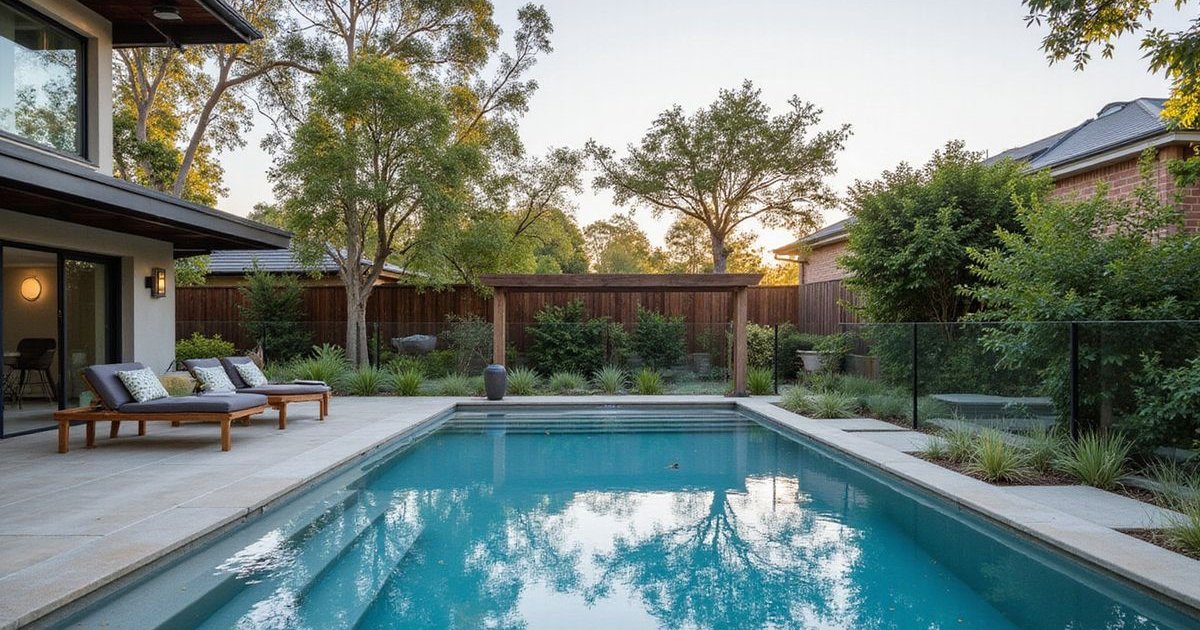
Pool fencing is mandatory in Victoria, but that doesn’t mean it has to compromise your pool area’s aesthetics. Modern fencing options can enhance rather than detract from your landscape.
This guide compares the main pool fencing options and helps you choose the right solution for your Melbourne pool. Our pool landscaping service integrates compliant fencing with beautiful garden design.
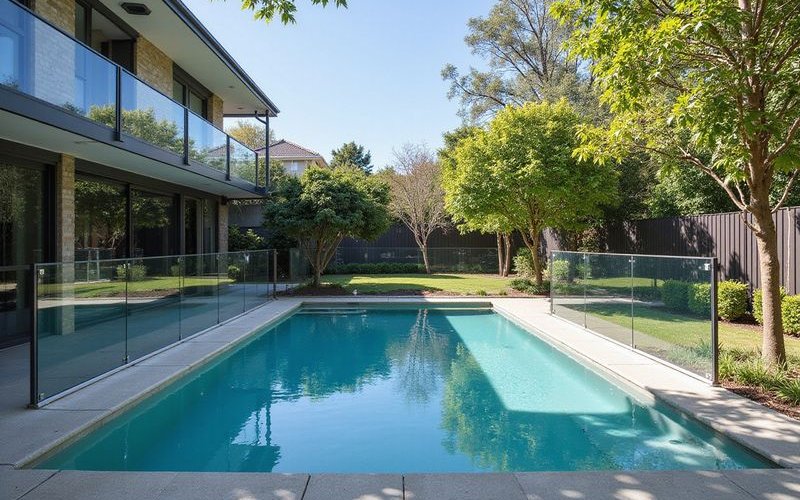
Victorian Pool Fencing Requirements
You know how most people focus purely on the “look” of the fence? From our experience, the real challenge is balancing that aesthetic desire with the strict 2026 safety codes found in AS1926.1. We have seen too many beautiful designs get rejected by surveyors because of a simple 10mm oversight.
Before discussing options, understand the regulations:
Key Requirements
- Minimum Height: The fence must be at least 1.2m high from the finished ground level.
- Non-Climbable Zone (NCZ): A 900mm arc on the outside of the fence must be completely clear of climbable objects (trees, BBQs, pot plants).
- Gate Mechanics: Gates must be self-closing and self-latching from any position.
- Direction of Opening: Gates must open outward, away from the pool area.
- Gap Limits: No vertical gaps greater than 100mm are permitted between panels or balusters.
- Ground Clearance: The gap between the bottom of the fence and the ground cannot exceed 100mm.
Compliance
All pool fencing must be inspected and certified by your local council or a registered building surveyor.
Victoria currently requires a compliance inspection every four years. You will need to budget roughly $250 to $400 for this inspection, plus a small lodgement fee with your council (e.g., Boroondara or Banyule).
Frameless Glass Fencing
Overview
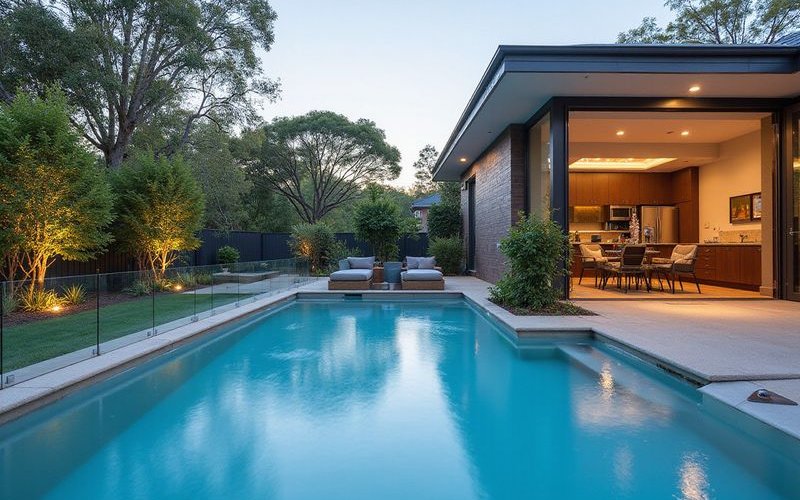
Frameless glass uses 12mm toughened safety glass panels with minimal hardware, creating an almost invisible barrier.
Components
- 12mm toughened safety glass panels: These are heat-soaked for durability.
- Stainless steel spigots: These floor-mounted supports clamp the glass at the base.
- Gate hinges and latches: Hydraulic soft-close hinges are the standard for safety.
- Hardware finishes: Options include Polished, Satin, or Matte Black.
Pros
- Maximum visibility: It offers an uninterrupted view of the water, which is critical for supervising children.
- Premium aesthetic: This style is the standard for high-end properties in suburbs like Kew and Ivanhoe.
- Spacious feel: It makes smaller courtyards feel significantly larger.
- Wind protection: Solid glass acts as a great windbreak without blocking the sun.
Cons
- Cleaning: Glass requires regular cleaning to remove water spots and salt residue.
- Heat trap: In small, enclosed areas, glass can reduce airflow and trap heat.
- The “Earthing” Requirement: If the glass is within 1.25m of the water’s edge, Australian Standard AS3000 requires the metal spigots to be “earthed” by an electrician. This can add $20-$30 per metre to your costs.
- Fragility perception: While tough, panels can shatter if struck on the edge by hard objects.
Cost Range
$400 - $800 per linear metre installed.
Pro Tip: Ask for “composite” or “insulated” spigots if your fence is close to the water. These non-conductive materials often remove the need for expensive earthing works.
Semi-Frameless Glass Fencing
Overview
Glass panels held between aluminium posts—a middle ground between full glass and traditional fencing.
Components
- 8-10mm toughened glass panels: Slightly thinner than frameless options.
- Aluminium posts: These are powder-coated in various colours (commonly black or silver).
- Glazing channels: The glass sits inside the post channels rather than on spigots.
- Standard latches: Often uses standard magnetic latches rather than premium hydraulic ones.
Pros
- Cost-effective: You get the transparency of glass at a lower price point.
- Structural rigidity: The posts provide excellent stability in high-wind areas.
- Easier installation: It is more forgiving of uneven ground than frameless systems.
- Post variety: You can match the post colour to your window frames or pergola.
Cons
- Interrupted views: The vertical posts break up the seamless “invisible” look.
- Maintenance: Dirt tends to collect in the bottom channel where the glass sits.
- Dated aesthetic: It is becoming less popular in modern landscape designs compared to fully frameless or blade fencing.
Cost Range
$250 - $450 per linear metre installed.
Aluminium Tubular Fencing
Overview
Traditional pool fencing using aluminium tubes in horizontal or vertical configurations.
Types
- Standard tubular: Vertical 16mm or 19mm tubes with horizontal top and bottom rails.
- Flat bar / Blade fencing: Vertical slats (e.g., 50x10mm) turned edge-on for a sharp, architectural look.
- Batten style: Thicker vertical posts (e.g., 65x16mm) that mimic the look of timber but with zero maintenance.
Pros
- Affordability: Standard tubular is the most budget-friendly compliant option.
- Durability: Powder-coated aluminium lasts for decades and will not rust like steel.
- Airflow: The gaps allow breezes to pass through, keeping the pool area cool.
- Low maintenance: It only requires a hose down once or twice a year.
Cons
- Climbability risks: Horizontal rails are strictly regulated to prevent climbing (usually tested to ensure a child cannot get a foothold).
- Visual barrier: Even thin bars obstruct the view more than glass.
- Style limitations: Standard loop-top fences can look generic and dated.
Cost Range
$150 - $350 per linear metre installed (Standard). $320 - $500+ per linear metre installed (Premium Blade/Batten).

Comparison Summary
| Factor | Frameless Glass | Semi-Frameless | Aluminium (Blade/Tubular) |
|---|---|---|---|
| Installed Cost | $$$ ($400-$800/m) | $$ ($250-$450/m) | $ - $$ ($150-$500+/m) |
| Visibility | Excellent | Good | Limited |
| Cleaning | High (Weekly) | Medium | Low (Yearly) |
| Hidden Costs | Earthing (Electrical) | None | None |
| Durability | Good (can shatter) | Good | Excellent |
| Installation | Complex | Moderate | Simple |
Making Your Choice
Choose Frameless Glass If:
- Views are paramount: You want to see the kids swimming from the kitchen window without obstruction.
- Budget allows: You are prepared for the higher initial outlay and potential earthing costs.
- Property value is key: Real estate agents in Melbourne’s northeast consistently value this as a premium feature.
- Wind is an issue: You need a solid barrier to protect the pool surface from debris and wind chill.
Choose Semi-Frameless If:
- Cost is a factor: You want the glass look but cannot justify the frameless price tag.
- DIY is an option: You are handy and want a system that is easier to install yourself.
- Stability matters: You live in an extremely high-wind zone where posts offer extra peace of mind.
Choose Aluminium If:
- Maintenance is the enemy: You do not want to spend your weekends cleaning glass.
- Airflow is needed: Your pool area is small and gets hot; the slats allow breezes to cool the space.
- Budget is tight: You need a compliant, safe barrier for the lowest possible cost.
- Architecture suits it: You choose a modern “Blade” or “Batten” style that complements a contemporary home facade.
Integration with Landscape
We find that the best fence is one that feels like part of the garden, not a cage around it. Our design team often uses planting to soften the hard lines of a fence, but you must be careful not to create a “climbable object.”
Whichever fencing you choose:
- Select safe plants: Use soft-foliage plants like Liriope (Evergreen Giant) or Agapanthus near the fence. These add greenery but cannot support a child’s weight for climbing.
- Complement your paving: Match your spigot or post colour (e.g., Matte Black or Silver) to the tones in your travertine or bluestone pavers.
- Plan the layout: Ensure the gate opens onto a hard surface, not grass, to prevent a muddy track forming in winter.
- Consider lighting: Up-lighting glass panels from the garden bed can create a stunning feature at night.
The best pool fencing becomes invisible—not because you can’t see it, but because it integrates seamlessly with the overall design.
Need Help Choosing?
Contact us to discuss pool fencing options as part of your overall pool landscape design.