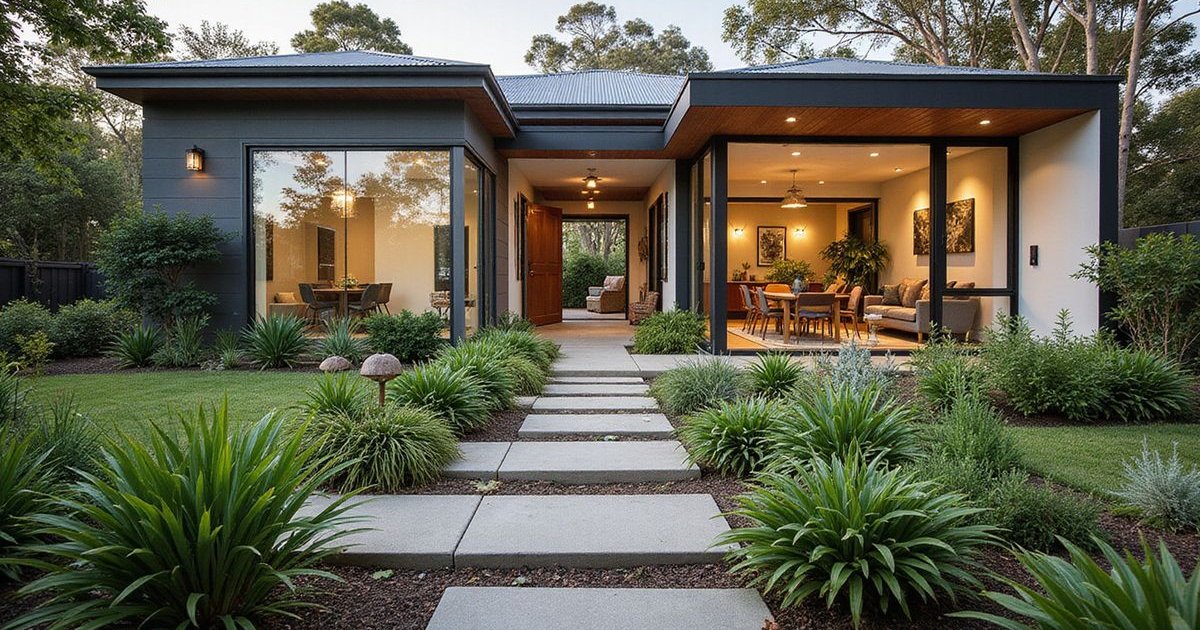
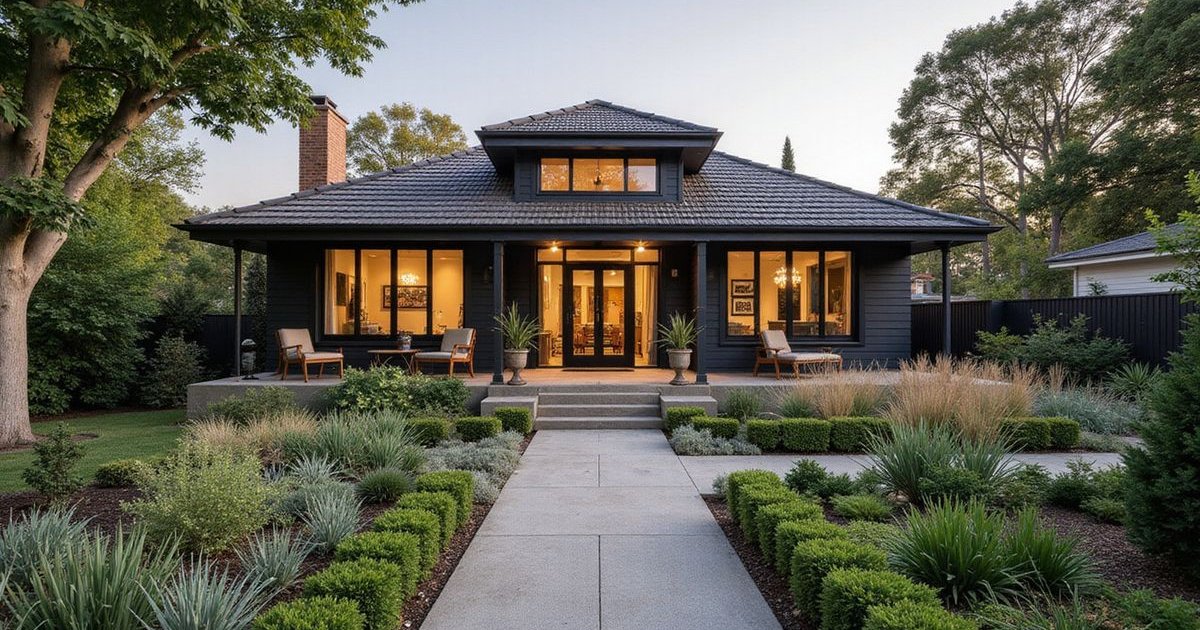
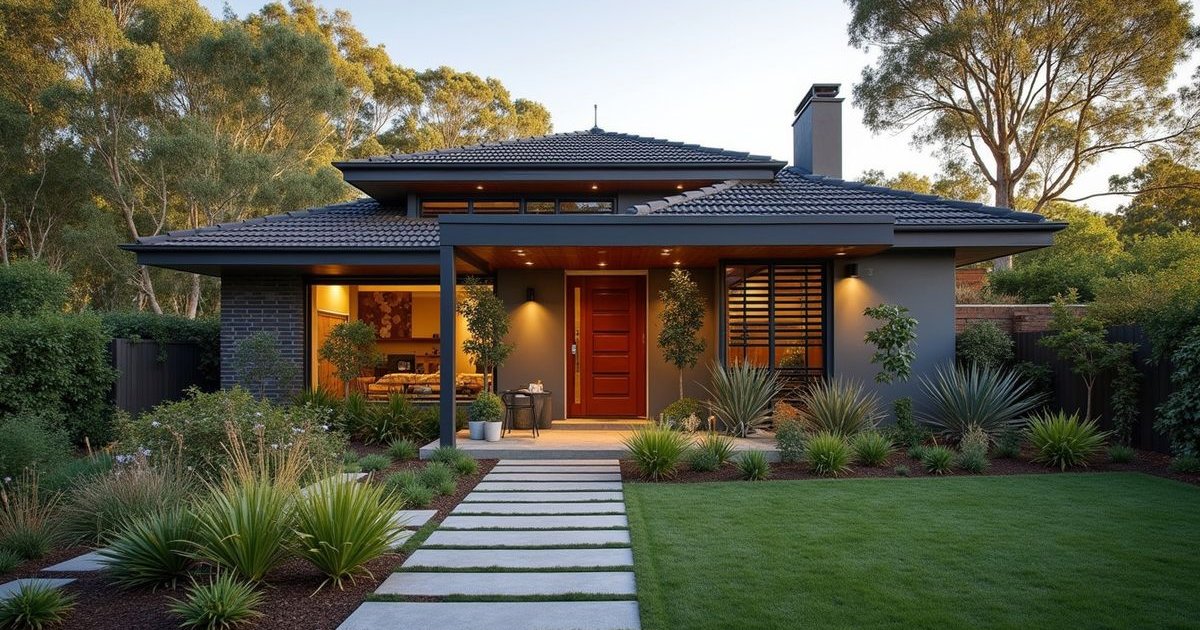
Native Garden Design in Melbourne: Creating a Sustainable Australian Landscape
Design a beautiful native Australian garden suited to Melbourne's climate. Plant selection, water-wise principles, and creating habitat for local wildlife.
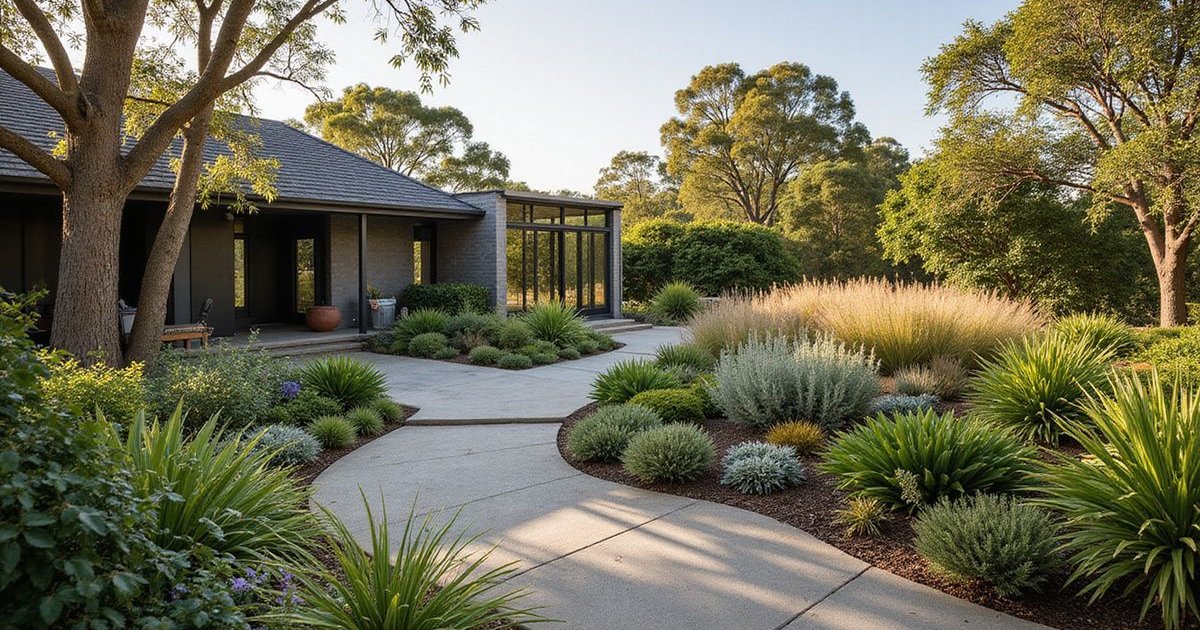
Native gardens offer beauty, sustainability, and connection to the Australian landscape. When designed well, they require less water, provide wildlife habitat, and create a genuine sense of place.
This guide explores how to design a beautiful native garden suited to Melbourne’s climate and conditions.
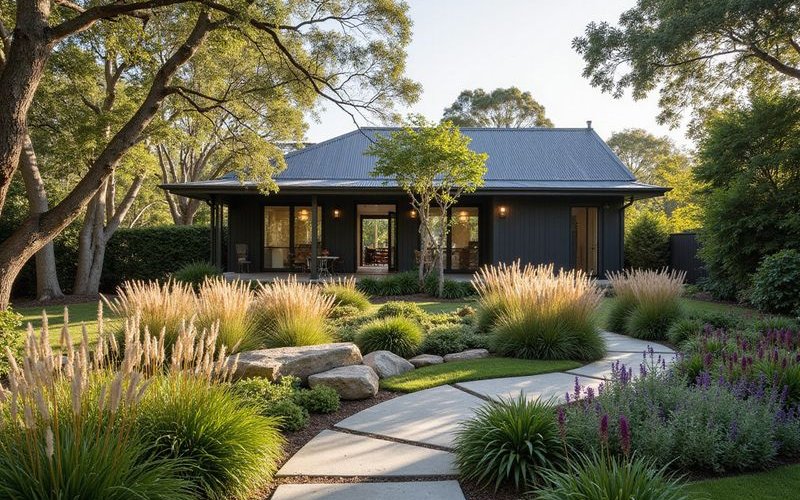
Founded by John French in 1981, our firm has spent over four decades integrating architecture with the unique Australian environment.
We have seen firsthand how the right landscape design transforms a property in suburbs like Eltham and Ivanhoe.
Many homeowners struggle to make European-style gardens survive our clay soils and erratic rainfall.
Our team focuses on creating spaces that thrive in these specific conditions rather than fighting against them.
This approach saves you money on water and maintenance while boosting local biodiversity.
Let’s look at why native plants are the smart choice for your property and how our planting and gardens service can help you execute a design that balances luxury with sustainability.
Why Choose Native Plants?
Environmental Benefits
We prioritize plants that evolved to handle Melbourne’s specific microclimates.
Local species require significantly fewer resources to stay healthy compared to exotic varieties.
Our experience shows that a well-planned native garden delivers four key environmental advantages:
- Water efficiency: Natives adapted to Melbourne’s rainfall patterns can reduce garden water usage by up to 60%.
- Wildlife habitat: Specific plants attract local fauna, such as the Superb Fairy-wren and King Parrot.
- Soil health: Indigenous plants have root systems that break up heavy clay soils common in the northeast suburbs.
- Low chemical inputs: You rarely need pesticides or high-nitrogen fertilizers to keep these plants thriving.
Practical Benefits
We often hear clients express relief at the reduced workload involved with native landscapes.
Hardy Australian species free up your weekends for enjoyment rather than constant toil.
Consider these practical improvements for your lifestyle:
- Lower maintenance: Local plants resist pests and diseases that plague imported species like Box hedges.
- Resilience: Established natives withstand the extreme heatwaves and sudden cold snaps typical of Melbourne weather.
- Year-round interest: Many species, such as Correa and Banksia, bloom in winter when exotic gardens are dormant.
- Longevity: Trees like the River Red Gum can live for centuries, serving as a lasting legacy on your property.
Aesthetic Benefits
Our designs aim to capture the rugged elegance of the Australian bush while maintaining architectural lines.
There is a sophisticated beauty in the muted greens and silver foliage of our indigenous flora.
- Sense of place: A native garden visually anchors your home to the surrounding environment, especially near the Yarra River corridor.
- Unique character: Australian textural contrasts stand out against the cookie-cutter standard of suburban lawns.
- Seasonal change: The landscape shifts subtly with paperbark peeling or wattles blooming gold in late winter.
- Wildlife activity: A garden full of nectar-feeding birds and butterflies creates a dynamic, living backdrop.
Design Principles for Native Gardens
Embrace Natural Forms
We encourage clients to move away from the rigid symmetry of traditional English gardens.
Biophilic design principles suggest that organic shapes reduce stress and improve mental well-being.
Our design team recommends the following approach for a natural aesthetic:
- Allow plants to retain their natural architectural habits rather than forcing them into geometric shapes.
- Avoid heavy formal pruning which can shorten the lifespan of species like Grevillea.
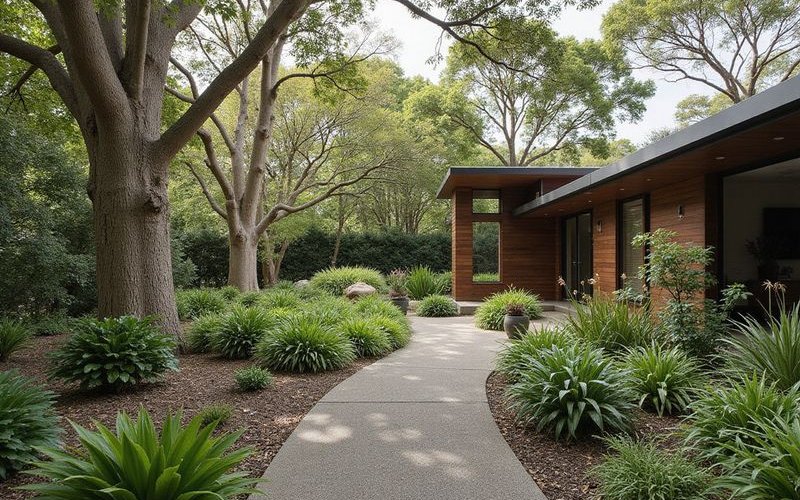
- Create flowing, organic layouts that guide the eye through the garden with curved paths.
- Mimic natural plant communities by clustering species that grow together in the wild.
Layer Your Planting
We build gardens from the ground up to replicate the density of a bushland environment.
This technique suppresses weeds naturally and keeps the soil cool during January heatwaves.
The Four Essential Layers of a Native Landscape:
| Layer | Function | Recommended Examples |
|---|---|---|
| Canopy | Provides shade, height, and cooling | Eucalyptus, Allocasuarina |
| Understorey | Offers screening and privacy | Banksia, Acacia |
| Middle Layer | Adds floral color and texture | Correa, Crowea |
| Groundcover | Living mulch to retain moisture | Viola hederacea, Dichondra |
Create Habitat Features
We view every garden as a potential sanctuary for local wildlife.
Small additions can turn a decorative space into a functional ecosystem.
Try incorporating these elements to invite nature back into your yard:
- Dense shrubs: Prickly species like Hakea provide safe nesting sites for small birds.
- Water sources: A pedestal birdbath protected from cats allows birds to bathe and drink.
- Rocks and logs: Large basalt rocks offer basking spots for skinks and habitat for beneficial insects.
- Leaf litter: Leaving some fallen leaves enriches the soil and supports fungi.
Plant Selection for Melbourne
Trees
We select trees that provide architectural impact without destroying plumbing or foundations.
The right tree adds significant value to your property and cools the home naturally.
Eucalyptus leucoxylon ‘Euky Dwarf’ (Dwarf Yellow Gum)
- Size: 5-6m height, making it safer near power lines.
- Features: Displays stunning pink, red, or cream flowers from autumn to spring.
- Wildlife: A magnet for nectar-feeding birds like Honeyeaters.
- Condition: Thrives in the heavy clay often found in Kew and Ivanhoe.
Allocasuarina verticillata (Drooping She-oak)
- Size: 6-10m height with a weeping habit.
- Features: The sound of wind blowing through its needles adds a sensory element to the garden.
- Wildlife: A critical food source for the threatened Glossy Black-Cockatoo.
- Condition: Extremely tolerant of dry soils and poor drainage.
Banksia marginata (Silver Banksia)
- Size: 3-8m height, depending on the specific cultivar.
- Features: Distinctive yellow flower spikes and silver-backed leaves.
- Wildlife: Provides essential high-energy food for birds and insects.
- Condition: An indigenous species that requires excellent drainage.
Large Shrubs
Our team uses these plants to create privacy screens and establish boundaries.
They grow faster than trees and provide immediate visual impact.
Callistemon ‘Kings Park Special’ (Bottlebrush)
- Features: Produces massive red flower spikes that look spectacular against a blue sky.
- Durability: Tolerates both wet feet and drought conditions.
- Usage: Excellent for screening out neighbors or busy roads.
Grevillea species
- Variety: Ranges from the large ‘Moonlight’ to the spreading ‘Poorinda Royal Mantle’.
- Features: Unique spider-like flowers available in creams, reds, and oranges.
- Usage: The long-flowering period ensures color in the garden year-round.
Medium Shrubs
We use medium shrubs to fill gaps and add texture at eye level.
These plants often serve as the “filler” that makes a garden look lush and established.
Correa glabra (Rock Correa)
- Features: Bell-shaped pale green or red flowers that hang delicately.
- Timing: Blooms in winter when most other plants are bare.
- Maintenance: Responds well to pruning and can be shaped into a loose hedge.
Westringia fruticosa (Coastal Rosemary)
- Features: Fine grey foliage that contrasts beautifully with darker green plants.
- Durability: incredibly tough and salt-tolerant (great for poolsides).
- Usage: The best native alternative to English Box for hedging.
Groundcovers and Grasses
We rely on these species to cover bare soil and suppress weed growth.
A dense mat of groundcover is the secret to a low-maintenance garden.
Lomandra longifolia ‘Tanika’ (Mat Rush)
- Features: Soft, lime-green foliage that looks great in modern planters.
- Durability: Practically indestructible once established.
- Usage: Perfect for bordering paths or planting in mass drifts.
Dianella revoluta (Black-anther Flax-lily)
- Features: Strappy leaves with sprays of blue-purple flowers followed by berries.
- Condition: Tolerates the deep shade found under large gum trees.
- Usage: Adds a vertical accent to low garden beds.
Water-Wise Design
Reduce Water Needs
We design systems that minimize potable water use without sacrificing lushness.
Intelligent zoning is the first step to a water-efficient landscape.
- Hydro-zoning: Group plants with similar water needs so you don’t over-water drought-hardy species.
- Mulch heavily: A 75-100mm layer of chunky pine bark reduces evaporation by up to 70%.
- Soil improvement: Adding organic matter helps sandy soil hold water and breaks up clay for better penetration.
- Drip irrigation: Sub-surface drip lines deliver water directly to the roots, preventing evaporation.
- Deep watering: Water heavily once a week rather than lightly every day to encourage deep root growth.
Drought Strategies
Our climate requires gardens that can handle long dry spells.
Preparation is key to ensuring your investment survives a harsh February.
- Establishment phase: New plants need regular water for the first 12-18 weeks to settle in.
- Weaning off: Gradually reduce irrigation frequency over two years to force roots to seek groundwater.
- Selection: Choose species from dry regions (like Western Australian natives) for the hottest spots.
- Summer dormancy: Accept that some plants may look less vibrant in late summer as a natural survival mechanism.
Creating a Natural Look
Avoid Common Mistakes
We often see well-intentioned DIY projects fail because of simple planning errors.
Avoiding these pitfalls will save you time and money in the long run.
- Over-planting: Giving plants too little space leads to poor air circulation and fungal issues.
- Rigid layouts: Straight lines and perfect circles rarely look right in a native setting.
- Ignoring soil pH: Many natives, especially Grevilleas, will yellow and die in alkaline soil.
- Heavy pruning: shearing natives like a formal hedge often results in woody, bare centers.
Embrace Naturalism
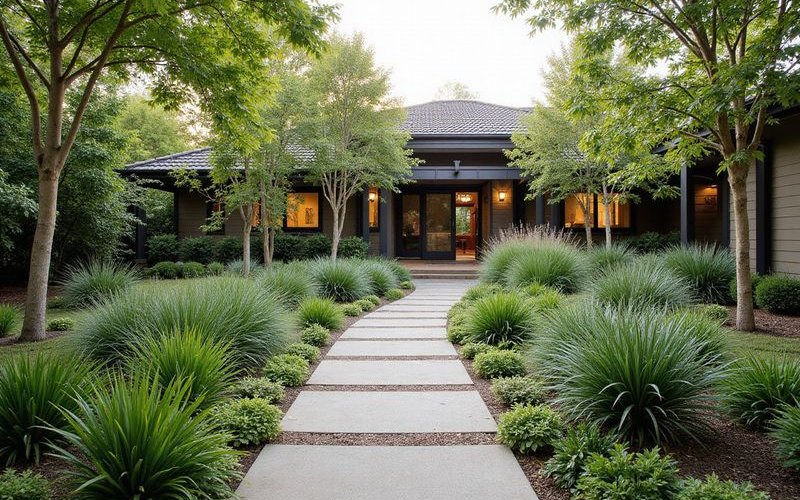
We aim for a “controlled wildness” that looks intentional but relaxed.
This aesthetic complements the mid-century and modern architecture popular in Melbourne.
- Informal groupings: Plant in drifts of 3, 5, or 7 for a natural flow.
- Texture variation: Place fine-leafed plants like Westringia next to broad-leafed species like Acacia.
- Vertical interest: Use rocks, mounding plants, and trees to create varying heights.
- Wabi-sabi: Appreciate the beauty in the imperfection of falling bark and spent seed pods.
Maintenance Considerations
What’s Different
We educate our clients that “low maintenance” does not mean “no maintenance.”
Native gardens require a different approach than traditional European landscapes.
- Fertilizer sensitivity: Never use standard blood and bone; use low-phosphorus native mixes to avoid toxicity.
- Pruning technique: Tip prune regularly after flowering rather than cutting back into old wood.
- Watering regime: Once established, most natives only need supplemental water during extreme heat.
- Weed management: Mulch is your best defense, but hand-pulling weeds early prevents them from seeding.
Seasonal Tasks
Our maintenance teams follow a seasonal calendar to keep gardens looking their best.
Staying ahead of these tasks prevents the garden from becoming overgrown.
Spring:
- Apply a slow-release native fertilizer.
- Mulch beds before the heat arrives.
- Monitor for aphids on new growth.
Summer:
- Water deeply during dry spells.
- Deadhead spent flowers on Callistemon.
- Top up birdbaths daily.
Autumn:
- This is the ideal time to plant new additions while the soil is still warm.
- Lightly prune summer-flowering shrubs.
Winter:
- Assess the structure of trees and remove damaged limbs.
- Plant bare-root trees if applicable.
- Plan any major landscaping changes.
Getting Started
Creating a successful native garden requires understanding your site, selecting appropriate species, and maintaining realistic expectations. Native gardens take time to establish but reward you with sustainable beauty for years to come.
Ready to create your native garden? Contact us to discuss native garden design for your Melbourne property.