DIY vs Professional Landscape Design: When to Hire a Designer
Should you design your garden yourself or hire a professional? We explore when DIY makes sense and when professional expertise delivers better value and results.
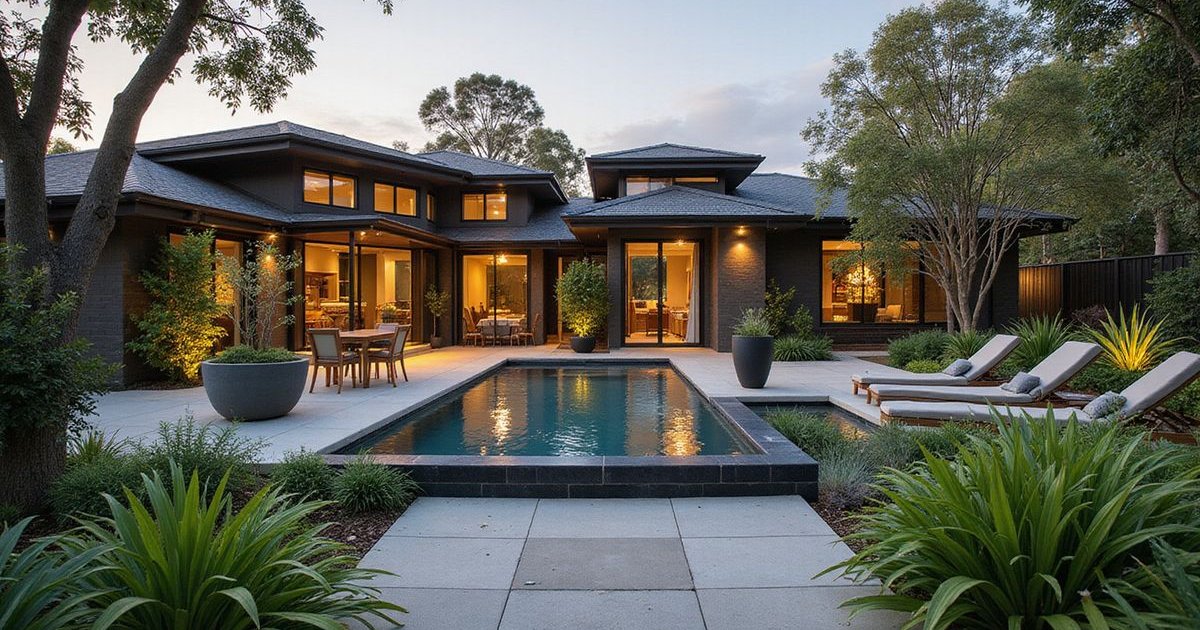
With endless garden inspiration available online, it’s tempting to try designing your own landscape. Pinterest boards overflow with ideas, YouTube tutorials abound, and planning software is increasingly accessible.
We see homeowners grapple with this choice every day.
The gap between a saved image and a constructed reality is often larger than most expect. This guide helps you determine when DIY makes sense and when you should invest in professional landscape design.
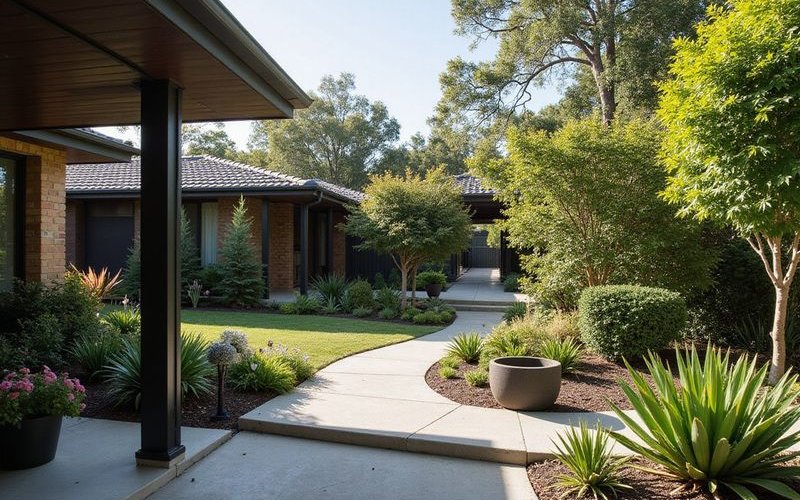
When DIY Design Works
DIY design can be successful in specific, lower-risk situations.
We generally encourage homeowners to take the reins on smaller, cosmetic updates.
If the project involves surface-level changes without structural implications, your personal touch can work wonders.
Small, Simple Projects
- Single garden bed renovation: Refreshing a flower border with seasonal annuals.
- Adding a vegetable garden: Installing raised timber planter boxes on level ground.
- Simple paving extension: Laying steppers or crazy paving in a small, non-structural area.
- Container garden design: Curating pots for a balcony or courtyard.
Minimal Technical Challenges
Your property needs to be naturally cooperative for a DIY approach to succeed safely.
- Flat sites with good drainage: No significant slopes (less than 1:20 gradient).
- No retaining walls required: Ground leveling does not exceed 600mm.
- Simple soil conditions: Loamy soil that isn’t heavy clay or solid rock.
- Good existing access: Easy machinery or wheelbarrow entry points.
Personal Interest and Skills
Success relies heavily on your willingness to learn the local horticulture.
- You enjoy design as a hobby: You view weekends in the garden as leisure, not labor.
- You have some horticultural knowledge: You know the difference between a shade-loving Clivia and a sun-hungry Anigozanthos.
- You’re patient with trial and error: A few dead plants won’t derail your enthusiasm.
- You have time to research and plan: Sourcing materials and checking underground utility lines takes time.
Limited Budget Priority
DIY is the logical route when funds are strictly allocated to materials rather than expertise.
- Construction budget under $20,000: Professional design fees can consume a disproportionate amount of small budgets.
- Willing to accept potential mistakes: Minor drainage issues or plant failures are acceptable risks.
- Planning to do work yourself: You intend to be the primary laborer.
- Learning is part of the goal: The process is just as important as the result.
When Professional Design Adds Value
For four decades, our firm has specialized in integrating architecture with the landscape across Melbourne.
We know that as site complexity rises, the cost of “winging it” increases exponentially.
Complex Sites
Professional expertise becomes essential when the land fights back.
Topography and geology are the primary drivers for hiring a landscape architect in areas like Eltham or Ivanhoe.
- Steep or sloping terrain: Slopes requiring engineering for retaining walls over 1 meter in height.
- Unusual shapes: Battle-axe blocks or tapering boundaries that waste space if not planned correctly.
- Challenging soil: Navigating the heavy clay of the northeast or the rocky shale of the river corridors.
- Drainage issues: Resolving overland flow paths to comply with Victoria’s strict water management regulations.
- Mature trees: Protecting root zones of significant Eucalypts or Oaks during construction.
These situations require technical knowledge that takes years to develop.
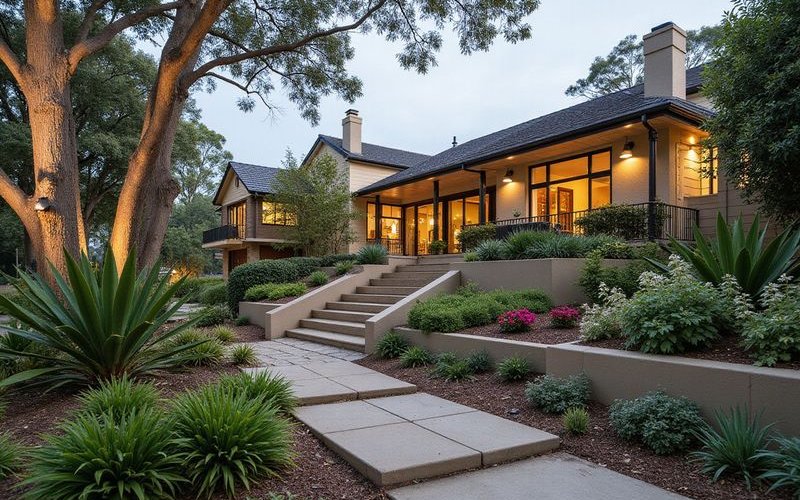
Significant Investment
When spending $100,000 or more on construction, professional design acts as an insurance policy for your capital.
We find that professional documentation typically delivers the following financial benefits:
| Benefit | Impact on Project |
|---|---|
| Budget Optimization | Allocates funds to high-impact areas rather than hidden structural fixes. |
| Mistake Prevention | Avoids expensive rework, such as moving plumbing or rebuilding failing walls. |
| Cohesion | Ensures materials match the home’s era, from Mid-Century Modern to Contemporary. |
| Property Value | A 2022 study suggested quality landscaping can increase resale value by up to 20%. |
The design fee (typically 3-10% of project cost) is small compared to potential savings on rework.
Integration Requirements
A garden should not feel like an afterthought attached to the house.
Professional design bridges the gap between interior luxury and exterior living.
- Connecting indoor and outdoor spaces: Matching floor levels for seamless threshold transitions.
- Matching garden to architectural style: Selecting plants and materials that complement the building’s facade.
- Creating flow between zones: logical movement patterns from the alfresco area to the pool or fire pit.
- Balancing competing requirements: Fitting a lawn, pool, and vegetable patch into a compact urban block.
Designers see the big picture that homeowners sometimes miss.
Council and Permit Requirements
Navigating local council planning schemes is arguably the most complex part of modern landscaping.
We deal regularly with the specific Vegetation Protection Overlays (VPO) and Significant Landscape Overlays (SLO) common in Banyule, Boroondara, and Nillumbik councils.
If your project requires:
- Building permits: Mandatory for retaining walls over 1m high or decks with specific footing requirements.
- Planning permits: Required for earthworks in flood-prone areas (SBO) or heritage overlays.
- VPO documentation: Arborist reports and replanting plans for tree removal.
- Council submissions: Detailed scale drawings complying with ResCode.
Professional documentation is almost always necessary to get these approved without delays.
Planting Success
It is not enough to simply pick plants that look good at the nursery.
Professional plant selection ensures:
- Right plant, right place: Choosing species adapted to Melbourne’s fluctuating climate.
- Long-term success: Avoiding aggressive root systems near pools or foundations.
- Seasonal interest: Ensuring the garden looks vibrant in winter, not just spring.
- Maintenance manageability: Grouping plants with similar water and pruning needs.
Incorrect plant selection is one of the most common DIY mistakes.
The Hidden Costs of DIY
Mistakes Are Expensive
The “cheaper” option often becomes the most expensive due to rectification costs.
We frequently see the following costly errors in self-managed projects:
- Incorrect drainage: Water pooling against house foundations can cause structural heave.
- Poor plant selection: Planting shade-lovers in full western sun requires total replacement within a year.
- Inadequate structure: Retaining walls built without ag-pipe drainage often blow out during heavy rains.
- Missed opportunities: Failing to install conduit for lighting or irrigation under concrete slabs before pouring.
These mistakes often cost more to fix than professional design would have cost initially.
Time Investment
Quality design is a labor-intensive process.
Most homeowners underestimate the hours required to produce a workable plan.
- Research and planning: 20-50+ hours of sourcing materials and checking regulations.
- Site analysis and measurement: Accurately plotting levels and existing features.
- Drawing and revision: Creating scale plans that contractors can actually follow.
- Plant selection and sourcing: Visiting multiple wholesale nurseries to find quality stock.
Is your time better spent elsewhere?
Learning Curve
Landscape design is a multidisciplinary field combining horticulture, engineering, and art.
Professional designers bring:
- Years of education and training: Tertiary qualifications in Landscape Architecture or Design.
- Hundreds of project experiences: A mental library of what materials fade, crack, or thrive.
- Understanding of what works: Knowledge of how local microclimates affect plant growth.
- Knowledge of local conditions: Familiarity with specific council preferences in your suburb.
DIY means learning on your property—sometimes through expensive mistakes.
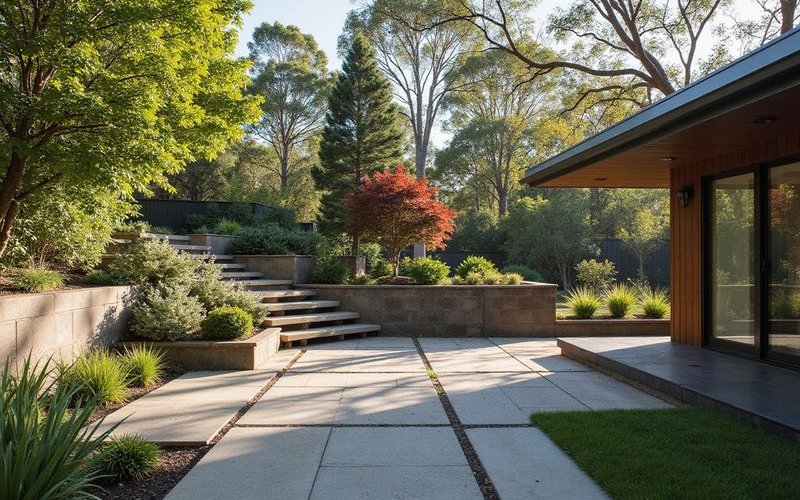
A Middle Ground: Consultation Only
If full design services exceed your budget, you might consider a strategic consultation.
This option provides expert eyes on your property without the cost of full documentation.
One-Off Consultation
- Professional site assessment: Identifying drainage risks or microclimates.
- Verbal recommendations: Immediate ideas for layout and material selection.
- Direction setting: Prioritizing which tasks to tackle first.
- Investment: Typically $300-$600 depending on seniority and location.
Concept Plan Only
- Professional layout plan: A master plan showing spatial arrangement.
- Material suggestions: A palette of hard surfaces and key plants.
- Planting themes: Mood boards rather than a detailed planting schedule.
- Investment: Generally starts from $2,500+ for standard urban blocks.
You can then develop details yourself with professional direction.
Questions to Ask Yourself
Before deciding, answer these questions honestly to gauge your readiness.
-
How much am I spending on construction?
- Under $20,000: DIY is likely the most proportional approach.
- Over $100,000: Professional design is necessary to protect the investment.
-
How complex is my site?
- Flat and simple: DIY is feasible.
- Steep, rocky, or clay-heavy: Professional input is highly recommended.
-
What are my skills and interests?
- Enjoy design: Consider DIY for soft landscaping (planting).
- Prefer results: Engage a professional for the hardscaping (structure).
-
What’s the cost of failure?
- Low stakes: Experiment with a garden bed.
- High stakes: Do not risk structural walls or expensive paving.
-
Do I need permits?
- Yes: If you are in a VPO or building walls, you need professional drawings.
Maximising Value from Professional Design
Collaboration is key to a successful project.
If you engage a designer, these steps will help you get the best result:
- Come prepared with clear requirements: Have a list of “must-haves” vs. “nice-to-haves.”
- Share your budget openly: This allows the designer to value-manage the concept from day one.
- Provide timely feedback: detailed responses keep the momentum going.
- Trust their expertise: Be open to suggestions that challenge your initial ideas.
- Ask questions if unsure: Understand the “why” behind specific design choices.
Making Your Decision
There is no universal right answer.
The best choice depends on your specific situation, budget, skills, and project complexity.
What matters most is making an informed decision—understanding both the creative potential of DIY and the technical assurance of professional design.
If you are unsure, consider booking a consultation. A professional assessment of your site will help clarify whether DIY is realistic or whether professional design would deliver better value for your home.