5 Signs Your Property Needs a Retaining Wall
Is your sloping block showing signs of erosion or instability? Learn the warning signs that indicate you need professional retaining wall construction.
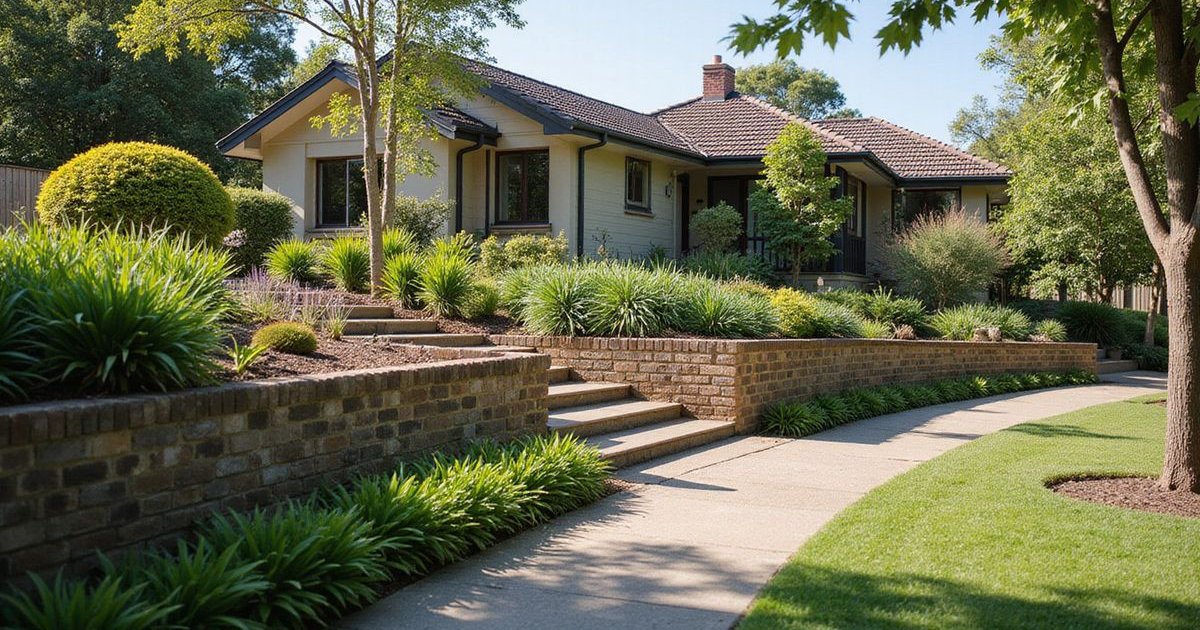
Some Melbourne homeowners look at their sloping blocks and see character, but we often see a ticking clock. Soil erosion and ground instability are quiet problems until they suddenly aren’t.
Founded by John French in 1981, our team has spent over 40 years navigating the unique geology of Melbourne’s inner northeast. We know that the reactive clay soils in suburbs like Eltham and Ivanhoe can turn a manageable slope into a structural headache overnight.
The key is catching the subtle warnings before you need expensive foundation repairs. Our steep block landscaping expertise helps identify and address these issues early. These are the five verifiable signs that your property requires a retaining wall.
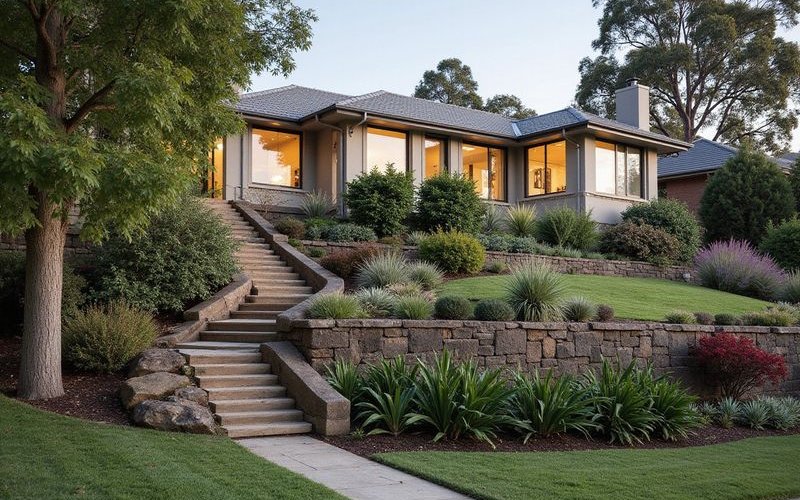
Sign 1: Visible Soil Erosion
What to Look For
You might notice “sheet erosion,” where a uniform layer of soil is removed, or more obvious “gully erosion” after heavy rain. Look for these specific indicators:
- Exposed tree roots that were previously covered
- Small channels or ruts carving through your lawn
- Soil piling up against the downhill side of fences or garden beds
- Bald spots where mulch or topsoil has washed away
- Sediment build-up on paved areas after a storm
Why It Matters
Erosion is a direct sign that gravity is winning. The Silurian sedimentary soil common in Melbourne’s northeast consists of a thin loamy topsoil over a heavy clay base. Once that top layer washes away, the clay below can become slick and unstable.
This isn’t just a cosmetic issue. Unchecked erosion changes your property’s drainage profile. It directs water toward your home’s foundations rather than away from them.
The Solution
A retaining wall halts this process physically. We design these structures to trap soil and manage water runoff, effectively locking your landscape in place.
Sign 2: Water Pooling or Drainage Problems
What to Look For
- Marshy patches in your lawn that remain squishy days after rain
- Water collecting against the side of your house
- White, salty stains (efflorescence) on brickwork
- Moss or mould growing rapidly on pathways
- “Muddy Yard Syndrome” where grass refuses to grow due to saturation
Why It Matters
Water is the enemy of structural stability. When water pools at the base of a slope, it creates hydrostatic pressure. This force can push against foundations with immense power.
Saturated soil loses its bearing capacity. In reactive clay areas, this saturation causes the ground to swell significantly, potentially lifting parts of your home or garden structures.
The Solution
We integrate agricultural drainage pipes (ag pipes) and free-draining gravel backfill behind every wall we build. This system intercepts subsurface water and redirects it to stormwater drains before it can pool and cause damage.
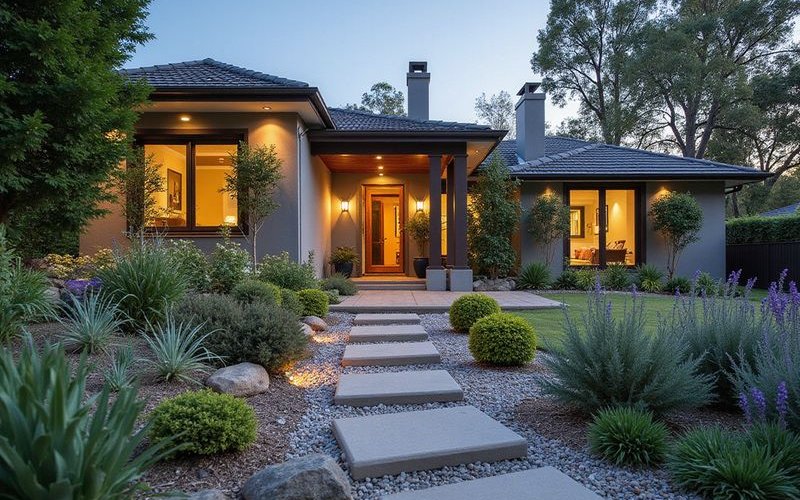
Sign 3: Leaning Fences or Structures
What to Look For
- Boundary fences listing downhill
- Gaps opening up between fence palings that were once flush
- Shed doors that stick or won’t close properly
- Paving stones that have lifted or separated
- Existing garden walls tipping forward
Why It Matters
A leaning fence is often the victim of “soil creep.” This is the slow, downward movement of the top soil layer. Your fence was designed to mark a boundary, not to hold back tons of earth.
Ignoring this can lead to legal headaches. In Victoria, if your soil damages a neighbour’s property, you could be liable. Addressing this early often prevents the need for a “Protection Works Notice” or a boundary dispute later.
The Solution
A professionally engineered retaining wall takes the load off your boundary fencing. It stabilizes the slope so your lighter structures can sit on firm ground without being pushed over.
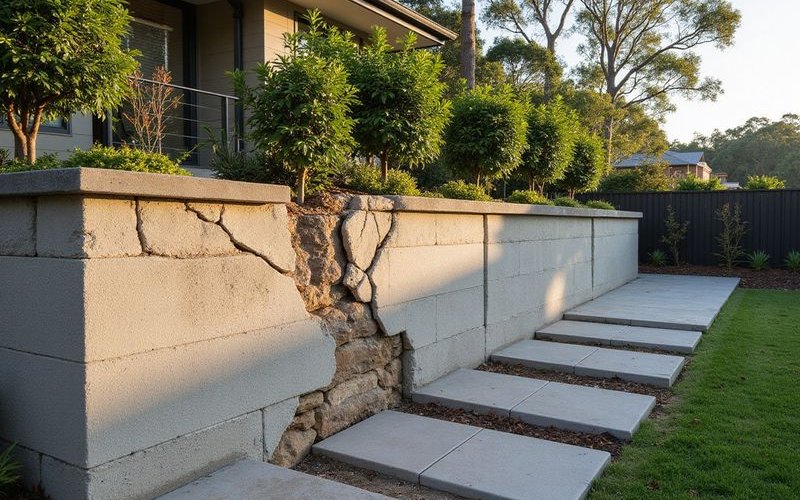
Sign 4: Cracks in Existing Walls or Foundations
What to Look For
- Zig-zag cracks in brickwork (step cracking)
- Internal plaster cracks above doors or windows
- Gaps appearing between skirting boards and the floor
- Existing retaining walls bulging in the center
- Concrete driveways separating from the garage slab
Why It Matters
Cracks are the language your house uses to tell you the ground is moving. In 2025, the average cost for foundation underpinning in Melbourne ranges from $10,000 to $30,000. Ignoring these signs allows the damage to spread.
Subsidence occurs when the soil beneath a structure shrinks or washes away. A retaining wall can prevent this by maintaining consistent soil moisture levels and preventing the soil migration that leaves foundations unsupported.
The Solution
New retaining walls can arrest this movement. By securing the soil mass, we stop the active subsidence, protecting your home’s structural integrity from further deterioration.
Sign 5: Unusable Outdoor Space
What to Look For
- Slopes too steep for a mower
- A lack of flat areas for a table or play equipment
- Gardens that are dangerous to weed or maintain
- wasted “dead zones” in the yard
- Safety concerns that keep children or elderly relatives inside
Why It Matters
Steep blocks often mean wasted square footage. In the current Melbourne property market, usable outdoor space is a premium feature. Families specifically look for “flat lawns” and functional entertainment areas.
Leaving a slope unusable leaves money on the table. Transforming a steep hill into flat, terraced levels increases the functional footprint of your land without changing your title boundaries.
The Solution
Terracing is the answer. We cut into the slope to create level platforms (terraces). This turns a single, dangerous hill into a series of flat, usable garden rooms.
When to Act: Urgency & Regulations
The 1-Meter Rule
In Victoria, timing is often dictated by regulations. You generally need a building permit if:
- The wall is over 1 meter in height.
- The wall is close to a boundary (regardless of height).
- The wall supports a load, such as a driveway or building.
Cost Comparison: Materials
Making a move now allows you to budget effectively. Here is a snapshot of current estimated costs for retaining wall materials in Melbourne (2025/2026 estimates per square meter):
| Material | Estimated Cost (Supply & Install) | Durability | Best For |
|---|---|---|---|
| Treated Pine | $250 - $450 | 15-20 Years | Budget-friendly garden beds |
| Hardwood Sleepers | $400 - $650 | 20+ Years | Natural aesthetic |
| Concrete Sleepers | $400 - $700+ | 50+ Years | Low maintenance & strength |
| Besser Blocks | $550 - $850 | 50+ Years | Rendered, modern finishes |
Immediate Danger
Act immediately if you see rapid changes. Water entering your home or a wall that has moved significantly after a storm are emergencies that require a structural engineer’s assessment.
Getting Professional Assessment
If you recognize these signs, the next steps are critical:
- Document the issues: Take photos of cracks or pooling water with a date stamp.
- Check the regulations: Determine if your proposed wall will be over 1 meter or near a boundary.
- Consult an expert: A landscape designer can help you balance the engineering requirements with the aesthetic value of your property.
- Avoid the “DIY” trap: Improper drainage behind a DIY wall is the leading cause of failure we see.
Prevention Is Better Than Cure
Even if your slope seems stable today, reactive clay soils are always moving. Ask yourself:
- Does water flow away from my house during a storm?
- Are my fence posts standing straight?
- Could I get more value from my property with a flat lawn?
Fixing a slope is always cheaper than fixing a foundation.
Take the Next Step
If you’ve noticed any of these warning signs on your Melbourne property, contact us for a professional assessment. We’ll evaluate your situation and recommend appropriate solutions.